Tuesday, July 22, 2008

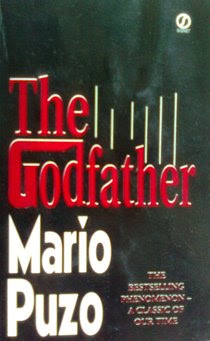
The Godfather

As I started reading the novel for the 1st time, I just couldn’t help comparing it with the film version that I had already viewed innumerable times. So everytime I came across the characters of Vito Corleone, Michael Corleone, Tom Hagen, etc. I just couldn’t keep my mind searching for the image as portrayed respectively by Marlon Brando, Al Pacino, Robert Duvall, etc. This continued till I came to Book III of the novel where I could tear myself from the comparison and could really concentrate on Mario Puzo’s creations.
The story revolves around the family of Vito Corleone, an underworld Don of New York who was forced to escape from his hometown at Sicily at a very young age following the murder of his father. In New York he took refuge in a rented home and started a family of his own. But fortune prevented him from a respectable living as he was forced to leave his job by a local underworld lord. Pretty soon he met the daring Peter Clemenza and the shrewd Sal Tessio and they introduced him to the world of smuggling at a very early age. Vito took the job in a fearless heart and very soon felt that the entire operation lacked proper organization. Meanwhile the local don intervened and tried to put a tax on their earnings. This infuriated Vito and very cleverly he staged the don’s murder and earned the respect of the entire area. This proved to be a turning point in his career as once the murder was committed he automatically managed to instill fear on the minds of his acquaintances. Thus began his illustrated career as Don Corleone in the underworld that culminated in his being held as the undisputed Mafia boss of the New York gambling circuit.
But problems arose in the form of mob war that included the infamous Five (Mafia) Families and the Corleones in their dealings with the upcoming illegal trade of narcotics, the future of smuggling. As Don Corleone refused his help in its introduction, attempt was made on his life that sparked the mob war which led to several members of the Corleone Family including Sonnie, the eldest son of Don Corleone getting killed in the way and Michael, the youngest son, being forced to leave New York. Thus Don Corleone was compelled to come to an agreement on giving security to the narcotic trade and made the return of Michael easy enough though a further attempt on his life could not be prevented that cost Michael to lose his first wife and sealed his destiny to become the next Don, inheriting his father's business. With Michael’s return the Corleone family started consolidating on their massacred empire and in the process many new faces like Rocco Lampone, Al Neri were given more responsibilities. Once the groundwork was done the family planned to move to Nevada and thus the strategist Michael planned for a deathly blow to the enemy. Traitors were identified and killed. The structure of the family was given a new shape. The security was strengthened and Michael was directed by the great Don before he himself passed away. Thus the Corleone family was once again on the verge of supreme power and the readers are kept glued to the words till the very climax.
The author has not only excelled in his description of the operation of the underworld but also the few places where he had detailed the gruesome murders, keep the reader horrified at the brutality of the underworld. But amidst the cruelties of the Mafia world, strangely the Sicilian’s love for their family makes a surprising contrast to this gory atmosphere and I nioticed that families have been given the 1st priority in any dealings. This shows the bondage of the members of the Sicilian Mafia families and their aim of a secured and powerful community for their children.At places, the author has introduced sub-plots involving Johny Fontane and Nino Valenti, Lucy Mancini and Jules Segal, Al Neri, who were closely related to the Corleone family, and in some of these the reader may find a bit disracted. Also portions revealing the more personal life of the characters could have been shortened, if not omitted altogether, that wouldn't have caused any harm to the actual theme.

Khela

A Rituparno Ghosh directed film on a fresh and original storyline with a fitting cast of Prasenjit, Raima Sen, Manisha Koirala and the little Akashneel Mukherjee with an appropriate guest appearance by Rupa Gangopadhyay. Though the story is a fresh one but its effects are only volatile and although the audience won’t feel bored during the viewing of the movie but will refrain to bring it as a part of any serious conversational topic.
The main story is about a movie director, Raja Bhowmick, who apparently can go upto any extreme to recruit his ideal cast. This is made evident by the fact that even though the production finalizes on the child actor to play the lead role in his next movie, Raja carries on his search for a better and a more ideal person. Thus he meets Abhiroop, a primary school-goer whom he feels can play the character correctly but is met with the obstacles while convincing the parents. But fortune favours him as Abhiroop, obviously thrilled by the idea of casting in a movie, hatches a plan of his own kidnapping and requests Raja to take him away fro the six-week long shooting. Raja is at first not so convinced but his perfectionist mind get the better of him and he carries Abhiroop from the his school to the movie site though assuring the child leave a note to his parents about his plans.
A sub-plot also evolves where we find Raja leaving his wife, Sheela, at his sister’s house for the sake of the movie. Here the selfishness of Raja is felt clearly as we find that though Sheela craves for a proper family life with children but Raja always shies away by the mere thought of it.
Thus begins the sequences of film shooting interspersed with a series of flashbacks featuring Raja and Sheela’s married life. These episodes end with the boy running a high fever towards the end of the shooting schedule and the simultaneous arrival of Sheela’s draft for the divorce suite with Raja. Thus as the shooting crew leaves for home, Raja is left alone with the bed-ridden Abhiroop and the decision for his future conjugal status. Though the film ends in a happy note but certain small details remain unexplored.The little Akashneel plays a very jolly role and deserves special mention as also Manisha Koirala in her touching characterization of Sheela Bhowmick. Raima Sen also plays her part nicely though the requirement of her role remains a mystery to me. The best point to note is that Prasenjit, if can be handled by a good director, can portray a very realistic image of the character he plays.

Apsara Theatrer Mamla

A not so very well known but quite intriguing Satyajit Ray’s Feluda story based on mysterious disappearances and murders of stage actors tuned to the rhyme of today’s scenario by Charbak and directed by none other than Sabyasachi Chakrabarty who plays the lead character of Feluda. The play may be thought of as a tribute to the golden days of the Bengali theatre projecting the devotion of the artists as a part of its theme. Though the essential facts remained the same as the original story but sub-plots relating the producer’s desire of selling up the Apsara Theatre to an estate promoter much against the determined wishes of the performers and the director has been added, as has been the inclusion of female characters in important roles, a rarity in Feluda stories.
The main theme is a sudden disappearance of the lead actor of the Apsara Theatre followed by a murder of the replacement after three months thus considerably jeopardizing the proposed show schedule. Several motives evolve and Feluda is held in confusion to the real identity of the criminal. I won’t give away the story but will surely point out that two equally significant motives have been introduced that was not in the original story. The play is not only an entertaining watch for the Feluda lovers but also serious critics may find in equally enjoyable. Special mention must be made of Kheyali Dastidar, who not only plays a character that was not in the original story, but plays it better than all the others. Sujit Ghosh, playing the character of the greedy producer, is also a new addition to the plot but he also is superb in his role. The third best performance, according to me, is by Subir Roychoudhuri as Jatayu who excels in his role and I think Sandip Ray can now think seriously of casting him as Lalmohan for any upcoming Feluda movie. The stage and the scene plans are also superb that is best noticed in the scene where the murder takes place in a dark lane in front of a taxi. Light has been expertly used to project the various moods of the story as it progresses. On the whole, a pleasant watch and a nice tribute to the golden past of the Bengali theatres.

Mere Baap Pehle Aap

Normally a Priyadarshan movie with Paresh Rawal can at once set the audience looking forward to at least two-and-a-half hour of constant laughter. But quite surprisingly fun is not the main theme this time. Priyadarshan’s composition must be given credit as he brings forward a very serious social problem, that of remarriage, and presents it to the audience wrapped up in a package of merriment. Though at places the movie is quite side tracked and main theme unfolds only after an hour but the presentation is nevertheless quite nice. Curiously I can’t say that any of the principle actors have acted wonderfully but the entire presentation is quite good. But even then mention must be made of Nasiruddin Shah who, though makes a guest appearance, but adds to the gravity of the story considerably. Also Archana Puran Singh, playing the part of the lady police officer excels in her role.

Three Men In A Boat

A hilarious novel by Jerome K. Jerome, aptly described by Anthony Armstrong as a comedy full of ‘calculated exaggerations’ in the introduction. This is possibly the most notable contribution of Jerome K. Jerome to English comedy. Actually intended to be a tourist’s guide of the Thames, the humour of the narrative got the best of it and what we received was a priceless piece of literature. It was quite a long time that I re-read the book but the fun seemed more and more fresh as the chapters commenced one by one.
Basically the story centers three friends, George, Harris and the author himself who, bored with their monotonous lifestyle, plans for a fortnight’s boating holiday on the Thames. What follows is a hilarious epic of fun, laughter and mirth that not only freshens the reader’s mind but brings to light the comical side of everyday happenings that remains hidden in the shadow of our apparently serious attitude to life. The beauty of this classical piece is that though set in the background of England, but the theme of the story has surpassed the boundaries of regions and has never gone beyond happenings that are actually quite ordinary and commonplace.The piece is blended with notes of some historical sites along the Thames and vivid description of nature at places adds to the richness of the text.

Wednesday, July 02, 2008

Jane Bhi Do Yaaro

An enlightening 1983 comedy directed by Kundan Shah featuring Nasiruddin Shah and Ravi Bajwani as two professional photographers, Vinod and Sudhir respectively, trying to set up business in the city of Bombay. But their plan of a successful inauguration of their studio is met with no response from the prospective customers. Thus began their ill lucks in the business till they met Shobha Sen, the editor of a daily 'Khabardar' that is popular in exposing corruptions.
Shobha, played by Bhakti Bharve, appoints them in a covert operation to extract information on the secret dealings between a dishonest builder, Tarneja and the municipal commissioner D'Mello. Also they are asked to keep a lookout for Ahuja, another corrupt builder who is supposed to be a rival of Tarneja. While gathering informations, the photographer duo stumbles upon some snapshots that shows Tarneja killing D'Mello. The duo then launches an investigation on their own but they couldn't locate the corpse.
Meanwhile in a humorous situation we find the coffin containing the corpse is being taken home by the drunk Ahuja while remaining unaware of its actual content. In the meantime Vinod and Sudhir realizes that Shobha is playing for money and so they tries to search for the corpse on their own. But the information of the whearabouts of the corpse reaches all the persons at the same time and it becames the centre of a race where Vinod, Sudhir, Tarneja, Ahuja, Shobha all takes part. The photographers ultimately recovers the body with the others in close pursuit and in order to dodge them, Vinod and Sudhir enters a theatre hall. Situations forces them as well as the others to take part in various scenes of the ongoing drama of Mahabharatha and from thereafter it follows a hilarious episode with the tale of Mahabharatha geting twisted to the great enjoyment of the crowd and at a later stage a part of Salim-Anarkali act being acted in the middle of Mahabharatha.
As police arrives on the scene the photographers explain them about the murder but the end of the movie is a surprise to everybody and it proves to be a classic in the hindi movie world.
At times the humour of the movie seems to be a bit stretched and forced but the clever acting of Nasiruddin Shah and the ever vibrant Satish Shah blended with the natural acting of Om Puri and the finer touches of Pankaj Kapoor, it never is boring and the story & screenplay writers, Sudhir Mishra and Kundan Shah must be praised for the wonderful storyline. This yester year movie is really a cellector's item.

Monday, June 23, 2008

Adventure Kaare Koe

A nice play by Aneek which can keep you seated smiling but not laughing for two hours. Though meant for comedy but certain comments and remarks send some valuable messages to the audience. The distinguishing feature of the play is the clever use of stage light to emphasize the effects of the various dialogues.
The story centres Bipradasbabu, a wealthy but miserly person who is planning to get remarried and so plans to meet his fiance at Calcutta. But problem arises when he finds that his niece is in love with a young man whom he strongly dislikes. So he plans to shift his niece for the time being to his sister's residence at Calcutta and instructs their family friend, Supriya Devi likewise. But the smart Supriya Devi, a psychoanalyst, being quite against Bipradas' wishes, has other plans up her sleeves. So as Bipradas leaves for Calcutta, Supriya Devi arranges a rendezvous for the young hearts at a Calcutta restaurant by the name of Hormone Garden. Meanwhile two of Bipradas' frustrated staffs takes this opportunity to enjoy a holiday in the absence of their master and they too leaves for Calcutta. After partying at various places in the city these two makes their way to the boutique shop run by Bipradas' fiance. Here the story takes some unexpected but humorous turns and we find the whole lot assembling at the Hormone Garden for dinner with several of them being unaware of the others' presence.
The humour continues and the climax is at Bipradas' sister's house where several misunderstandings cumulate to a happy finish. The drama is quite good and is an enjoyable watch.

Thursday, June 12, 2008

Gangtoke Gandogol

This time Feluda is involved in an intriguing case at Gangtok. At the plane to Bagdogra on a possible holiday trip, Topshe & Feluda meets Sashadharbabu, a joint partner of a perfume company, who is on his way to meet the other partner Mr. Selvanker. But once on the plains, they get the news of the tragic death of Mr. Selvanker. On further enquiry, it was learned that on his way across the moutaneous terrain, Selvanker's was killed by a rolling boulder from high up the cliff that drove his taxi over the edges of the precipice.
As Sasadharbabu prepares for an immediate departure, Feluda gets acquinted to another tourist, Nishikantababu who informs that Selvanker, an antique collector, had bought a miniature statute of a deity bearing valuable stones from him. Curious at this piece of information, Feluda makes an enquiry only to learn that the statue was never seen after Selvanker's death. Sensing foul play, Feluda launches an investigation on his own and soon encounters two more mysterious characters. The 1st is the German photographer Helmut Unger who had shared the same lodging with Selvanker prior to the later's death and whose real motive on gangtok visit seems something else than photography only. Helmut informs Feluda of the 2nd mysterious character Dr. Vaidya, a soothsayer, who had earlier hinted a possible misfortune awating Selvanker. The case gets intense from this point as Feluda and the apparently innocent Nishikanta both receives threatening messages and Feluda recovers a puzzling telegram addressed to Selvanker before his death. Dr. Vaidya also comes to the picture and arranges a seance with himself becoming the medium. On the seance, Dr. Vaidya reveals, through his clairvoyance, that Selvanker was killed by his long lost child Virendra. But a dissatisfied Feluda carries on the investigations further and the readers are put in wait for an unexpected climax.
The book once again portrays the brilliance of Feluda's analytical power but additionally Ray excels in his narration of the picteresque Sikkim that can easily be envy to any travel guide. I don't know whether it was meant for any particular age, but whenever I had gone through this story starting from my school days till now, but I had enjoyed savouring it in the same way again and again.

Monday, June 09, 2008

Chalo Let's Go

This is a story of 4 friends

Asim – A medical graduate who decides not to pursue medicine, a confident and practical lad who will pursue anything that seems best and a born leader. He starts a tourism business with his three friends but ends up as an English teacher in a North Bengal orphanage.

Hari – A sensitive soul, singer, weak towards ladies but his chief problem behind his earlier break ups with five different girls seems to stem from his innocence and his difficulty in English speaking. He, after his venture with his friends in the tourism business, finds his soulmate and leads an unblemished commonplace life thereafter.

Sekhar – A hot headed youth who is not on good terms with his father but a good friend. He ends up as a celebrity ‘Jeebon Mukhi’ singer.

Sanjay – The intellectual and a good friend but when there is a girl involved, somewhat selfish. He is the narrator to this story and his future promises of a budding scriptwriter.

These four starts a band but fails miserably on their 1st show. Then Asim decides to start a tourism business and convinces his friends on the project under the name ‘Gharoa’ (Homely). He raises the fund, and manages some clients for touring North Bengal.

Right from the beginning everything goes wrong. It starts with some of the tourists getting fussy when they don’t get the chosen window seats as was promised to them. Hari was given the responsibility to book the hotels in advance, but he had mistakes in all of the bookings and most of the clients get furious when they find they have to share rooms with others. To top it off, Hari meets a girl in distress and presses his friends to accommodate her in the party that puts added pressure to the finances. Unfortunately, news arrives of Shekhar’s dad’s death and he leaves making the team a bit crippled. But this news also brings the surprise turn when realizing their mental conditions on their friend’s father's death, the tourists now becomes softer and offer helps and advices to them. Thus a family type atmosphere prevails and now everybody interacts and in the process the audience enjoys the get-to-gether.

Speaking of the tourists we have Rudrababu, a terribly fussy as well as a responsible young man who fills the gap of Shekhar and helps Asim in the management. In the end we find Rudra joining ‘Gharoa’ as the most responsible member.

Next is Professor Dhurjati with a chemistry background who is not satisfied in any situation. All through the journey, we find him engrossed in a book with a cover that he claims to be a mystery story, but its actual contents reveals his distorted mental condition.

Again we have the Bengali Doctor from London, who is critical about Bengali’s poor organizational skills, their pitiable marketing abilities, but never offers his help to a dying local at the dark hours of the night.

His wife Tulu is also an important character who is apparently psychic but in her heart craves for a better partner.

Next is a Bengali couple consisting of a hen pecked husband and a devoted wife whose love for each other is eclipsed by the stressed family life.

There is also the lady mystery writer, who due to her attitude, is nicknamed Ms. Gambhir (Ms. Serious), but is an acute observer of human nature.

There is also the confirmed womanizer who describes his work as ‘Madam Crackerology’ and whose current companion is a girl of half of his age.

The last is the distressed Riya, who is ditched by her boyfriend and tries to find solace in the company of Hari.

Thus the story is about all the strata that comprises part of the middle class Bengalees. It portrays both sides of the coin nicely. Thus the story depicts how mutual respects are established and how it is destroyed. It speaks about growing trust between complete strangers and parallely describes mounting distrust among persons. The story is also about building relations and breaking them. But never for once the audience will feel any malice and the director has left it to the spectators to decide between the sin and the clean.

The story is studded with funny sequences blended with some scenes with a serious note and when considered to be a movie viewed within hours of watching ‘Sarkar Raj’, it is really a great relief from the modern day’s serious and complicated lifestyle.

Anjan Dutta once again chants the optimistic Bengali attitude and this is a nice and important contribution to the current Bengali movies. Saswata and Rudraneel deserves special mention as their acting, mainly the later’s are impeccable.

Sarkar Raj

Sarkar Raj is the sequel to Ram Gopal Varma’s Sarkar. Though the earlier film was chiefly an adaptation of “The Godfather” but influences of the later is lesser in the current movie.
Here the theme starts with one Anita Raj, a businesswoman from London, on her father’s advice, makes a project plan of setting up a power plant at Thakarwadi, Maharashtra. But she is informed by the sleezy Hasan Kazi that for this they have to acquire permission of Sarkar, Subhash Nagre. Agreeing to that, Anita asks Kazi to arrange a meeting with Sarkar. The meeting is also attended by the CM and Shankar Nagare. On hearing that the project will require evacuation of the 40000 residents of the nearby villagers, Sarkar is enraged and opposes the plan. But Shankar, who now handles much of Sarkar's works, understands the implications of the project and convinces Sarkar of how it will help in the development of Maharashtra. Believing in his son, Sarkar asks permission of Rao Sahab, the lord of Thakawadi. Once Rao Sahab gives his consent, Shankar launches a campaign through the villages informing the actual implications of the project. He quickly gathers huge support but problem arises in the form of Somji, the grandson of Rao Sahab and a very popular figure in local politics, who stirs up protest campaigns against the project. Meanwhile, on Shankar’s hint and sensing foul play in the project finances, Anita kicks out Kazi from the project. Now Kazi teams up with Kangra, a corrupt politician and plots revenge on Shankar. Shankar asks Chander, the right hand of Sarkar to arrange for a meeting with Somji but while on a phone call with the later, Shankar withnesses his pregnant wife getting killed by a bomb planted in their car and was supposed to carry both of them at that time. The Nagre family goes to mourning while Shankar removes Chander from his post as the head of security and places his man, Billu as his replacement. Chander gets enraged by this. At the same time Somdhi gets kidnapped. The media tries to use this as a possible break up between the Sarkar and Rao Sahab but both maintains harmony in front of the public. Meanwhile Chander locates the wherabout of Somji and he along with Shankar and Billu recovers him. In the process Shanker kills Kazi, the actual kidnapper. Understanding Shankar’s good intensions, Somdhi promises to co-operate Shankar on the project, in front of the press. But another problem crops up in the form of Wora, a minister of Gujarat, who makes a pact with Anita’s father and tries to shift the project from Maharashtra to his place. Undeterred, Shankar feels he can manage the situation when there is again a blow to the project as Shankar is assassinated by a contract killer. Then we find an enraged but composed Sarkar set to unearth the real plot and the masterminds behind the conspiracy. A horrifying pack of surprises awaits the audience as the evil minds are unmasked one after the other.
As a whole the storyline is more original than Sarkar but I felt that it lacked the compactness of the earlier film. Amitabh outshines the others in the last twenty minutes and Aishwariya Rai is brilliant in conveying feelings through expressions only. Supriya Pathak is a silent but important character who plays her part exquisitely. Others, including Abhishek, seemed ordinary in that respect.
At times the story touches on ‘The Godfather’, the important ones being:
  1. The sequence involving the car bomb blast which reminds us of the same type of fate that awaited the unfortunate Apollonia Vitelli, the 1st wife to Michael Corleone.
  2. An important character, who could not stand Shankar in Sarkar’s position, though remotely resembles Fredo Corleone in action, shares the same fate as the later. In ‘The Godfather Part II’, Fredo had the same type of hatred towards Michael.
  3. There is also another character who remotely resembles Hymann Roth of ‘The Godfather Part II’.
  4. Near the end we find the Sarkar lamenting of Shankar’s death, the same feeling had been conveyed by Michael Corleone following her daughter’s death as depited in ‘The Godfather Part III’.

Parts of the scenes, where the detailing and directing seemed amiss include:

  1. Shankar’s table where he meets his clients doesn’t appear to be a working table at all.
  2. Why the camera was required to be projected towards the light during several shots of the interiors, specially those involving Shankar’s office, defies my imagination. Infact, the alternation of light seemed irritating to my eyes.
  3. When the 1st shot is fired at Shankar, normally a cool headed person, he never takes ground but remains upright. I don’t think he wanted the shooter to have a better aim!
  4. The actual motive behind the setting up of the power plant seemed too much far fetched and not at all realistic.
  5. Sarkar has been portrayed as someone whom the CM visits for seeking permission of setting up the power plant. This implies that the power of Sarkar surpasses the CM as well, I don't know how anybody can justify that!
  6. Why don’t Chander ever change his clothes? From the previous movie, he seemed to be wearing the same set.
  7. Till the day that I watched the movie I understood that it was only electricity that travelled through bare conductors. But the film shows that fire too uses the same property when in Kazi's hideout when one of the electrical poles caught fire it transmitted via the conductors!!

Barring these the movie is quite good and should be watched by those who want to follow the Sarkar chapters.

To add a very personal conjecture to the summary I want to make an observation. The title of the film contains the word Raj. This is the same as the surname of Anita who is shown to be handling the project while residing in Sarkar's villa as the movie finishes. Maybe this is purely a false assumption but it may so happen that the next episode features Sarkar & Raj teeming up in their operations for the welfare of Maharashtra.

Badshahi Angti

My favoutire Feluda novel with the perfect theft blended with surprises and just the right amount of action and mystery.

The place is Lucknow where Feluda and Topshe is holidaying with Topshe’s father. There, they are guest to Dhirubabu, friend to Topshe’s father and plans their tour from there. But soon after their arrival, they meet Dr. Srivastav who shows them a ring, which is believed to be a part of Aurangzeb’s personal ornaments. Dr. Srivastav received it as a gift from one of his orthopaedic patients, Piyarilal when the doctor cured the later’s only living son, Mahabir. But Dr. Srivastav is apprehensive as he recounts that on the previous night there had been an attempted robbery in his house. He felt that the thief is after the ring. Dhirubabu understands his anxiety and offers to keep the ring is his disposal. But on the next day the ring is found stolen. The other characters are also introduced in this juncture, the chief being Banbiharibabu whose business was to supply wild animals to different firms and who now leads a retired life enjoying his personal zoo consisting of ferocious and poisonous creatures like wild cat, corocodile, rattle snake, hyena, etc. The other important character is Mahabir, now a film actor, who is on a visit to his birthplace.

These characters also get involved as Feluda tries to investigate the theft while continuously receiving threats. Suspects accumulate in the form of Mahabir, who is thought to have an interest to the ring from the financial standpoint, Banbiharibabu, who is found to be an antique collector, though he never shows interest to it in front of others. Dr. Srivastav is also suspected on the ground that to baffle the thief, the doctor might have staged a theft so as to prevent a further attempt in his house. Also there is the mysterious saint whose movements arouse suspicion and the person(s)(?) who delivers(s) the threatening letters to Feluda. We also find one Bilasbabu near the end of the story who also plays a somewhat major role.

The riddle continues and the culmination is at Lachmanzula where the actual villain is caught amidst a tension filled atmosphere.

The storytelling is outstanding and the novel, I feel, is a treasure to readers of all age.

Namak Haram

A Hrishikesh Mukherjee superhit with Rajesh Khanna – Amitabh Bacchan duet, once again hand picked by my wife to boost our proud collection of golden age blockbusters.

The story is about two friends – Vicky, from the rich business class of Bombay and Somu, from a middle class Delhi family.

Vicky is rich, noble at heart but bears a distinct class distinction in mind while dealing with the employee class, be it their servants or the employee of his father’s factory and is quite ruthless in dealing with them. This lands him up in trouble when he insults the Union leader of the factory over an issue of a worker’s rightful compensation. The union calls a strike and Vicky is coerced by his father, shrewd businessman, to ask for forgiveness in front of the workers. Vicky can’t bear this humiliation and leaves for Delhi.

Somu, on the other hand, is also a kind-hearted rational and intelligent soul but when it comes to his friend’s problem, he forgets everything else. So on hearing about his friends humiliation, he plots a revenge and asks Vicky to find him a post as the factory’s worker. He executes his plan smoothly and gradually he acquires the mill workers’ trust and becomes the new Union leader.

As Vicky feels that the score is settled but a new problem arises in the form of Somu himself. During his rise to the Union leader’s post Somu has come in close contact to the labourers and their families and he is now sympathetic to their causes and demands. He could now feel their wretchedness as a high inflation hits the country and is torn between his principle and his friendship. Vicky, also realizing this partly, can’t decide whether to support his friend or his father.

The story now takes a complex turn and will hold the spectators glued to their seats for a moving finish. The outstanding action of Amitabh as Vicky and Rajesh Khanna as Somu outshines the other actors to a great scale but the supporting cast of A.K. Hangal and Simi Grewal also deserves special mention.

mp.b

Developed in Visual Basic 6.0, mp.b is an easy to use home made Metronome for Pc.

The facilities that it provides:

1.Gives a count from 1 – 16 beats in a bar in std. beat formats of 2, 4, 8 and 16.

2.Beat speed ranges from 1 – 276 beats per min.

3.Emits a distinct beep sound as the beat is counted which can be muted as well.

4.Displays the beat count.

5.Graphical display of beat count.

6.Display of bar count.

How to use?

1.The default count of the programme is 4 crotchet beats per bar @ 138 beats per min in sound ON mode.

2.Change the beat count (range: 1-16) using the vertical scroll bar in beat count window.

a.The value in the upper box of the time signature window box will be set.

b.The number of magenta coloured circles in the lowest window in will be set likewise.

3.Change the beat type (options: minim / crotchet / quaver / semi-quaver) using the red coloured buttons in the beat window.

a.The value in the lower box of the time signature window box will be set.

4.Change the beat speed (range: 1 - 276) using the horizontal scroll bar in the beat speed window.

a.The beat speed and the corresponding beat interval will be displayed in the brown and green boxes below the scroll bar.

5.To start count press starcount button.

a.Bar count starts from 0 and is displayed in bar count window.

b.Beat count starts from 0 and is displayed in the window, right of the time signature window.

c.Beat count is graphically displayed changing the corresponding circle’s colour in the lowest window to orange from magenta.

6.To put OFF the beep, press mute button.

a.The caption the button toggles from mute to beat. If again sound is required press the beat button.

7. To stop count press stopcount button.

a.Beep, if ON, is stopped.

b.Bar count is reset to 0.

c.Beat count vanishes and is reset.

d.The colour of all the circles turns to magenta.

8.In the event of any change during a count.

a.Bar count is not reset.

b.All other displays and sounds are dynamically changed.

Point to be noted:

Dynamic change of variables is not recommended. To change any variable, 1st stop the count, change the parameter values and then start the count.